Jean-Jacques Dessalines
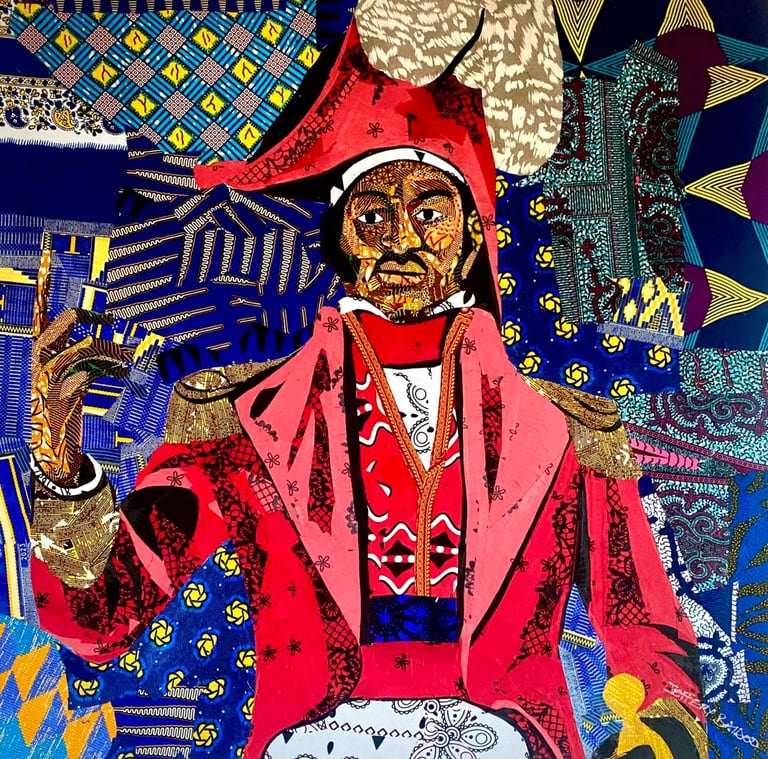
Jean-Jacques Dessalines (c. 1758–1806) was a revolutionary leader, military commander, and the founding father of Haiti. He played a decisive role in the Haitian Revolution, which led to the creation of the first independent Black republic in the world.
Born into slavery in the French colony of Saint-Domingue (modern-day Haiti), Dessalines endured brutal conditions before rising through the ranks during the revolution. He initially fought alongside Toussaint Louverture, one of the early leaders of the uprising against French colonial rule. Dessalines quickly proved himself as a fierce and strategic military commander.
When Napoleon Bonaparte attempted to reassert French control and reinstate slavery, Dessalines became a central figure in resisting French forces. After Louverture was captured and taken to France, Dessalines took full command of the revolutionary army and led the final push for independence.
On January 1, 1804, Dessalines declared Haiti independent from France, ending colonial rule and slavery. He later crowned himself Emperor Jacques I, becoming the first ruler of independent Haiti. His leadership marked a historic moment—not only for Haiti but for enslaved people across the world—proving that a successful slave revolt could overthrow a colonial empire.
However, his rule was also controversial. In 1804, Dessalines ordered the massacre of many remaining French settlers, an event that continues to be debated by historians in terms of its causes and consequences. Dessalines ruled Haiti until 1806, when he was assassinated by political rivals. Despite his short reign, his impact was profound.
Today, Jean-Jacques Dessalines is remembered as a symbol of liberation, resistance, and Black sovereignty. His leadership helped dismantle one of the most brutal systems of slavery in history and established Haiti as a beacon of freedom and independence for oppressed people worldwide.